
Wildfire Home Prep Checklist for LA & OC Homeowners
By DKI Restotech Team · Aug 7, 2026 · Updated Aug 31, 2026 · 6 min read
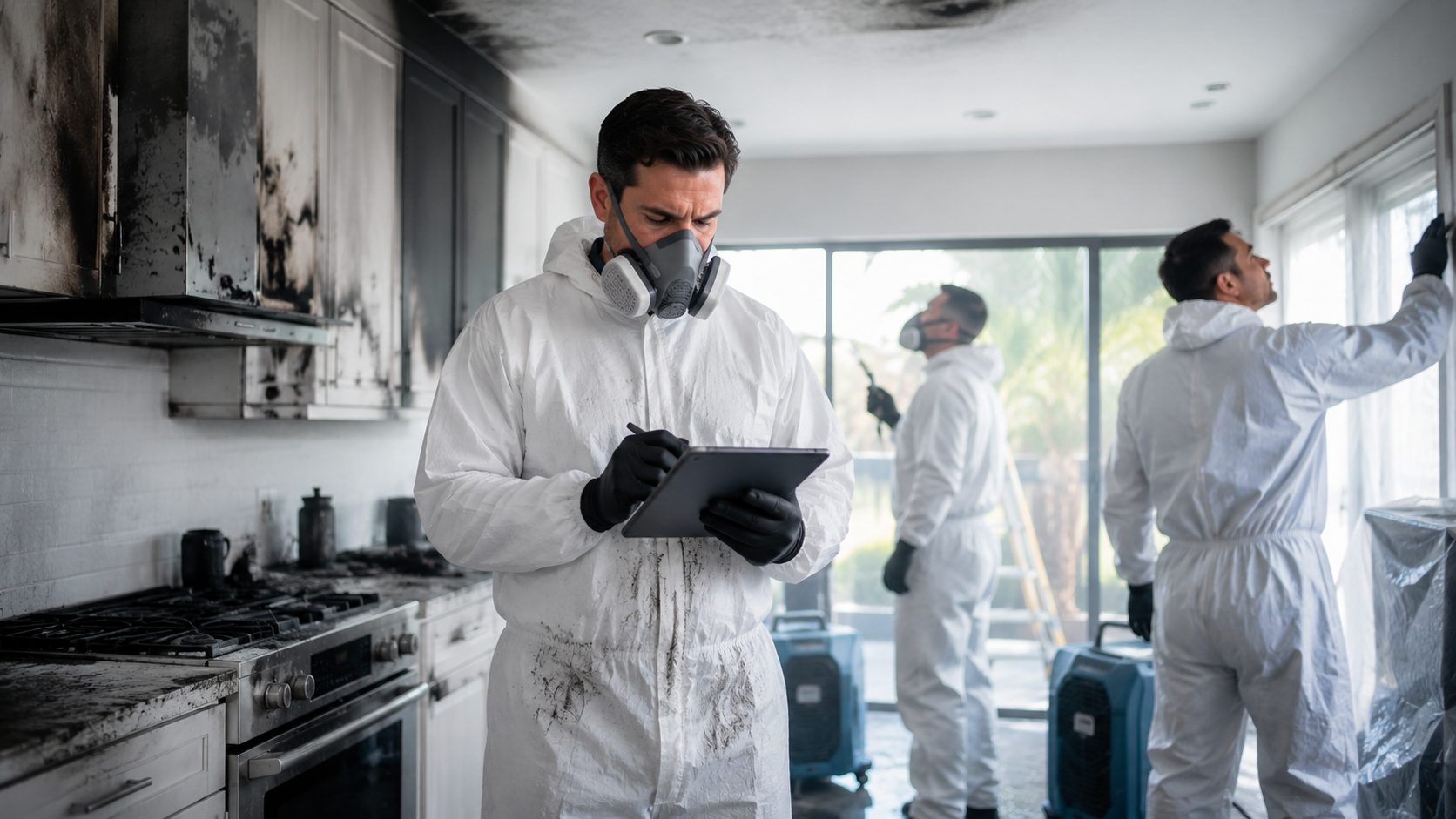
Wildfire prep in Los Angeles and Orange County comes down to five things: clear defensible space around your home, keep roofs and gutters free of debris, screen and seal vents against embers, harden eaves and siding, and pack a go-kit before Santa Ana wind season peaks in fall. Most homes that burn are ignited by wind-driven embers landing on debris, not by direct flame contact from a fire front.
Why does defensible space matter so much in Southern California?
Southern California's chaparral landscape is built to burn, and Santa Ana winds can push embers a mile or more ahead of an active fire front. Defensible space slows fire spread and gives firefighters a safe area to defend your structure. California's Public Resources Code 4291 requires 100 feet of defensible space around homes in State Responsibility Areas and many Very High Fire Hazard Severity Zones across LA, OC, and Riverside foothill communities.
Think of defensible space in three zones. Each zone has a different job, and skipping one undermines the others.
| Zone | Distance from structure | Priority actions |
|---|---|---|
| Zone 0 | 0–5 feet | No combustible mulch, plants, or storage against the house; ember-resistant hardscape only |
| Zone 1 | 5–30 feet | Widely spaced, low-fuel plants; remove dead vegetation; trim tree limbs 6+ feet off the ground |
| Zone 2 | 30–100 feet | Reduce brush density; keep grass mowed to 4 inches; break up continuous fuel with driveways or gravel |
Zone 0 is now enforced by California law (effective for new regulations phasing in for Very High Fire Hazard Severity Zones) and is the single highest-impact change most homeowners can make, since it's the area closest to where embers actually accumulate against siding and windows.
How should you clear your roof and gutters before fire season?
Roofs and gutters collect the exact fuel embers need: dry leaves, pine needles, and palm debris. Clear gutters, valleys, and roof-to-wall intersections at least twice before peak Santa Ana season, typically once in early fall and again after any Santa Ana event drops fresh debris.
- Install metal, non-combustible gutter guards rather than plastic mesh, which can melt and clog
- Check roof valleys and skylight wells where debris piles up out of sight
- Trim any tree branches overhanging the roofline back at least 10 feet
- Verify your roof covering is Class A fire-rated; wood shake and shingle roofs are especially vulnerable and are restricted in many high-severity zones
Are your vents and eaves an ember entry point?
Attic and foundation vents are one of the most common ways embers get inside a home, since a standard vent screen with 1/4-inch mesh does little to stop wind-driven embers. Retrofit vents with 1/8-inch corrosion-resistant metal mesh, or install ember- and flame-resistant vents rated to the relevant State Fire Marshal standard.
Open or boxed eaves let embers collect and ignite the roof structure from underneath. Boxing in eaves with fire-resistant material, and sealing gaps where siding meets the roofline, closes off another pathway embers use to reach combustible framing.
What does ember-proofing actually mean for your home?
Ember-proofing is the practice of eliminating every small gap, crack, and combustible surface where a wind-blown ember could land and smolder undetected. It matters because homes usually ignite from accumulated embers, not direct flame contact, which is also why two houses on the same block can have opposite outcomes.
- Replace combustible door mats, wood fences that attach directly to the house, and stored firewood near exterior walls
- Cover exterior attic and crawlspace vents; check weep screeds and utility penetrations for gaps
- Keep a garden hose long enough to reach all sides of the house, with a nozzle attached, ready to go
- Close all windows and doors, including pet doors, before evacuating
If smoke or fire does reach your property, even light exposure can leave lingering odor and residue embedded in drywall, insulation, and HVAC systems. Our smoke and soot restoration team has handled this across LA and OC foothill communities for over 40 years and knows which materials can be cleaned versus what needs replacement.
What belongs in a wildfire emergency kit?
Build your kit before red flag warnings are issued, since evacuation orders in Southern California can come with very little notice during a fast-moving Santa Ana-driven fire. Store it somewhere you can grab in under five minutes.
- Copies of insurance policies, ID, and property documents in a waterproof pouch or cloud storage
- A week of medications, N95 or P100 respirator masks, and a first aid kit
- Phone chargers, a battery bank, and a battery-powered radio for evacuation updates
- Sturdy shoes, a change of clothes, and cash in small denominations
- Photos or video walkthrough of your home's contents for future claims documentation
That documentation step matters more than most homeowners realize. If a fire does damage your property, having a clear record of your home's condition beforehand makes the difference in getting a fair settlement, and our team offers insurance claims help to walk you through the adjuster process.
What should you do the moment a wildfire threatens your property?
Follow evacuation orders immediately and don't wait for a second notification. Once you're safely evacuated, if there's any damage, smoke intrusion, or water damage from firefighting efforts, document it once it's safe to return, and don't attempt major cleanup yourself, since soot is acidic and can etch surfaces the longer it sits.
Our 24/7 emergency response team mobilizes for both residential and commercial properties across LA, OC, and Riverside; if you manage a business property, our commercial restoration division handles the same wildfire prep and recovery process at scale.
Frequently asked questions
How far from my house does defensible space need to extend?
California's Public Resources Code 4291 requires 100 feet of defensible space around structures in State Responsibility Areas, broken into a noncombustible Zone 0 within 5 feet, a lean-and-clean Zone 1 out to 30 feet, and a reduced-fuel Zone 2 out to 100 feet.
Do I need special vents to protect against embers?
Standard 1/4-inch mesh vent screens do not reliably stop wind-driven embers; homes in high fire hazard areas should use 1/8-inch metal mesh or ember- and flame-resistant vents rated to California's applicable fire testing standard.
What should I do if my home has smoke damage but no visible fire damage?
Smoke and soot are acidic and can continue damaging drywall, HVAC systems, and belongings the longer they sit, so schedule a professional inspection even if you see no charring, since odor and residue often penetrate further than they appear.
DKI Restotech has served Los Angeles, Orange County, and Riverside for more than 40 years as an IICRC-certified wildfire restoration and fire damage restoration contractor. If your property has been affected by wildfire, smoke, or firefighting water damage, call us anytime at (949) 359-4090 for immediate help.
Want more of our local restoration guides in your Google results?
Adds DKI Restotech to your preferred sources in Google Search. You can change it anytime.
Related Posts
Santa Ana Wind Season: How to Protect Your Home Before the Winds Hit
Fall's Santa Ana winds turn dry SoCal brush into wildfire fuel. Here's what LA & OC homeowners should …
Wildfire Evacuation Plan: What Every SoCal Family Should Have Ready
A go-bag by the door isn't enough. Here's how LA and OC families should actually plan wildfire evacuation …
Home Hardening Against Wildfire Embers: What Actually Works
Flames grab headlines, but wind-driven embers are what actually get inside homes and start fires. Here's what real …