
Santa Ana Wind Season: How to Protect Your Home Before the Winds Hit
By DKI Restotech Team · Oct 8, 2026 · 6 min read
Santa Ana winds turn Southern California's driest chaparral into kindling, capable of pushing a single spark into a fast-moving wildfire within minutes. Fall — roughly October through December — is the highest-risk stretch for LA and OC homeowners, since vegetation is at its driest exactly when offshore wind events peak, making pre-season prep essential.
Why Do Santa Ana Winds Make Wildfires So Much Worse?
Santa Ana winds form when high pressure builds over the Great Basin and Mojave Desert, pushing dry air down through mountain passes toward the coast. As that air descends through the Cajon Pass, the Santa Ana Canyon, and the passes above Malibu and the Santa Monica Mountains, it compresses and heats up, and relative humidity can drop into the single digits.
That combination — sustained winds in the 30-50 mph range with gusts well above that, bone-dry air, and tinder-dry brush — is exactly the fuel-wind-dryness pattern fire behavior analysts watch for. Under these conditions, embers travel well ahead of the main fire front, jumping roads and firebreaks to ignite new spot fires in neighborhoods far from where the fire started. That's why wildfire restoration calls after a Santa Ana-driven fire often span a wide radius, not just the immediate burn scar.
Why Is Fall the Highest-Risk Window for LA and OC Homeowners?
Southern California's wet season typically runs from December through March, so by October grasses and chaparral haven't seen meaningful rain in six months or more.
That dead and dying vegetation — especially on the hillsides ringing the San Gabriel Valley, the Santa Monica Mountains, the Santa Ana Canyon, and the foothill communities of Orange County and Riverside — is at its lowest fuel moisture of the year.
Santa Ana wind events are also most frequent and intense from fall into early winter, so critically dry fuel and strong offshore winds routinely overlap in October, November, and early December, which is why insurers and fire agencies both treat this window as the peak of the regional fire season.
What Should Be on Your Pre-Wind-Event Checklist?
Once a Fire Weather Watch is issued, you typically have a day or two to prepare before conditions turn critical. Work through this list before the winds arrive, not after:
- Clear defensible space. California requires 100 feet of clearance (or to the property line) around structures in State Responsibility Areas — remove dead brush, keep grass low, and separate shrubs and trees from each other and from the house.
- Clean roofs and gutters. Dry leaves and pine needles in gutters are one of the most common places wind-blown embers ignite a home.
- Trim back branches. Keep tree limbs at least 10 feet from the roof, chimney, and power lines.
- Secure outdoor items. Patio cushions, doormats, and anything flammable near the house can catch embers and ignite siding or eaves.
- Screen vents and check windows. Fine, ember-resistant mesh on attic and foundation vents keeps blowing embers from getting inside the structure.
- Relocate firewood and propane tanks. Keep them at least 30 feet from the home.
- Charge everything. Public Safety Power Shutoffs are common during high-wind events — charge phones and medical devices, and know where flashlights and batteries are.
- Photograph your home and belongings. A quick video walkthrough now makes any later insurance documentation far easier.
- Pack a go-bag and know two evacuation routes. Wind direction can shift quickly, closing off a route that seemed safe an hour earlier.
Fire Weather Watch or Red Flag Warning: What's the Difference?
The National Weather Service issues two levels of alert for Santa Ana fire conditions, and knowing which one is active tells you how much time is left to prepare.
| Alert Level | What It Means | What To Do |
|---|---|---|
| Fire Weather Watch | Conditions favorable for extreme fire behavior are possible in the next 12-72 hours | Finish defensible space work, charge devices, review evacuation routes |
| Red Flag Warning | Critical fire weather conditions are occurring or imminent, sometimes with only hours of notice | Avoid outdoor burning or spark-producing work, stay alert for evacuation orders, monitor local emergency alerts |
What If Smoke or Fire Damage Already Reached Your Home or Business?
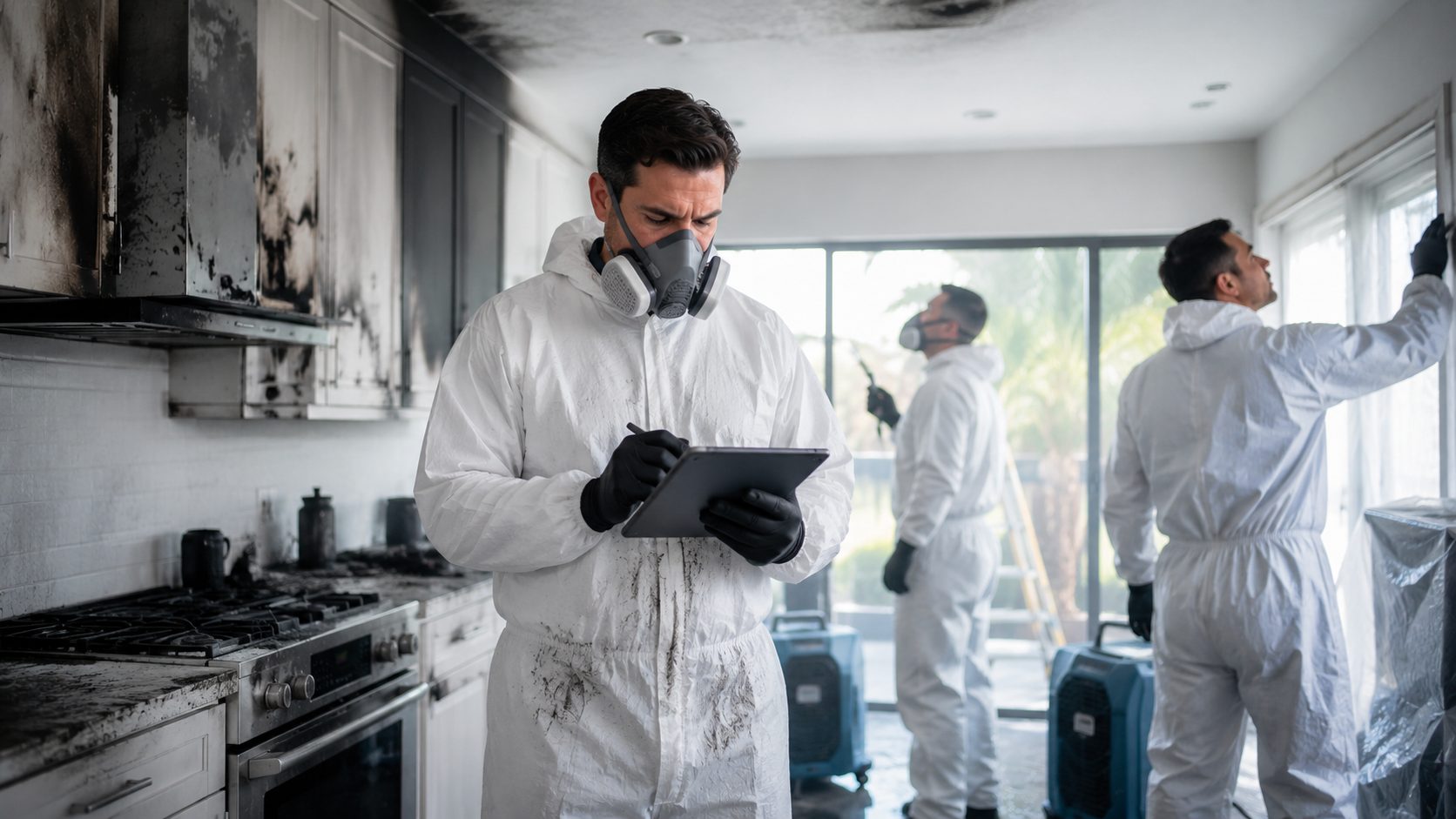
Even homes miles from the nearest flame front can take on significant smoke and soot damage when Santa Ana winds carry embers and smoke through a neighborhood. Smoke particles work into HVAC systems, insulation, drywall, and fabric, and acidic soot residue can continue corroding metal and discoloring finishes for weeks if it isn't professionally removed.
If your home has visible soot, a persistent smoke odor, or ash infiltration after a nearby fire, call for 24/7 emergency response before attempting to clean it yourself — household cleaners can actually set soot stains permanently into surfaces.
For structures with direct heat or flame damage, professional smoke and soot restoration involves structural drying, deep deodorization, and content cleaning that goes well beyond a surface wipe-down.
DKI Restotech has handled residential and commercial restoration across Los Angeles, Orange County, and Riverside for more than 40 years, and our IICRC-certified technicians document damage the way adjusters expect to see it, which also makes insurance claims help move faster.
Business owners dealing with smoke infiltration in retail space, offices, or warehouses face the added pressure of lost operating days, so getting a qualified assessment within the first 24-48 hours matters just as much commercially as it does at home.
Frequently asked questions
How much warning do Santa Ana wind events typically give homeowners?
The National Weather Service usually issues a Fire Weather Watch 12 to 72 hours before a Santa Ana event, then upgrades to a Red Flag Warning as conditions become critical, sometimes with only a few hours' notice. Treat any watch as the signal to start your prep checklist, since wind speed and humidity can shift faster than forecast.
Does homeowners insurance cover smoke damage if my house didn't actually burn?
Most standard homeowners policies cover smoke and soot damage caused by a nearby wildfire, even without direct flame contact, since smoke infiltration is treated as covered fire damage. Document everything with photos before cleaning, and get a professional assessment, since insurers often want to see evidence of smoke penetration into HVAC systems and soft materials.
How much defensible space does California law require around my home?
California requires 100 feet of defensible space, or to the property line, around structures in State Responsibility Areas, split into an immediate zone of 0-5 feet and extended zones out to 100 feet with different clearance rules for each. Many LA and OC foothill communities outside those designated areas follow similar local fire codes, so check with your city or county fire department for the exact requirement on your property.
If Santa Ana winds have already brought smoke, soot, or fire damage to your home or business, don't wait to start cleanup — call DKI Restotech at (949) 359-4090 for 40+ years of local, IICRC-certified restoration experience across LA, OC, and Riverside.
{# Google "Preferred Sources": readers add us as a preferred source so our articles surface more often in their Top Stories / news results. Official embed (button + deeplink fallback): https://developers.google.com/search/docs/appearance/preferred-sources #}Want more of our local restoration guides in your Google results?
Adds DKI Restotech to your preferred sources in Google Search. You can change it anytime.
Related Posts
Wildfire Evacuation Plan: What Every SoCal Family Should Have Ready
A go-bag by the door isn't enough. Here's how LA and OC families should actually plan wildfire evacuation …
Home Hardening Against Wildfire Embers: What Actually Works
Flames grab headlines, but wind-driven embers are what actually get inside homes and start fires. Here's what real …
Creating Defensible Space: The 0–5, 5–30 & 30–100 ft Zones Explained
California law requires 100 feet of defensible space around homes, broken into three zones with distinct clearance rules. …