
Home Hardening Against Wildfire Embers: What Actually Works
By DKI Restotech Team · Sep 15, 2026 · Updated Sep 1, 2026 · 6 min read
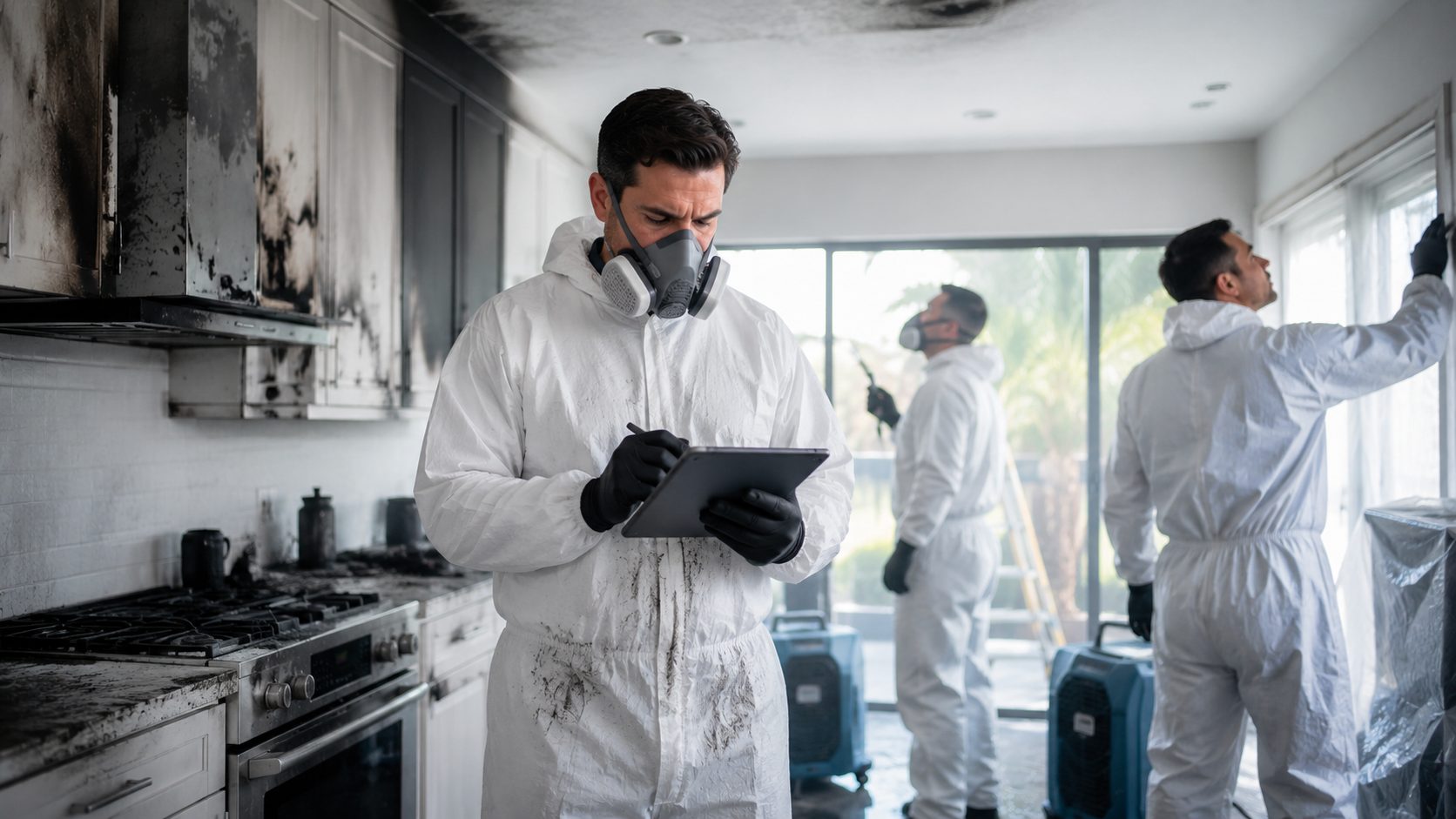
Embers — not the advancing flame front — ignite the majority of homes lost in Southern California wildfires, because wind-driven embers travel far ahead of a fire and slip through vents, gaps, and debris to ignite structures from the inside out. Hardening a home against embers means closing those entry points: sealed and screened vents, Class A roofing, ignition-resistant siding, dual-pane tempered windows, and a clean, noncombustible zone right against the walls and under decks.
Why do embers destroy more homes than the fire itself?
During a Santa Ana wind event, burning bark, leaves, and branches lift off the fire and ride the wind well ahead of the visible flame front — sometimes landing on structures long before any fire crew or resident sees flames nearby. These embers don't need to touch a home directly to start a fire; they collect in vulnerable spots, smolder, and ignite hours later.
That's why homes can burn in neighborhoods the flame front never physically reached, and why two houses on the same block can have completely different outcomes depending on construction details rather than luck. In our 40+ years responding to fire losses across Los Angeles, Orange County, and Riverside, we've walked through countless homes where the point of ignition was a vent, a woodpile against the wall, or a gap under a deck — not a direct flame impingement.
Where do embers actually get into a house?
Vents are the single biggest vulnerability. Attic, foundation, crawlspace, and eave vents are designed to move air, which means they're also designed to let embers in unless they're properly screened. A standard quarter-inch mesh screen is not enough — embers small enough to pass through it can still ignite insulation or debris inside the attic.
- Attic and roof vents: Use vents listed as ember- and flame-resistant under the State Fire Marshal's WUI product standards, or retrofit existing vents with 1/8-inch or smaller noncombustible, corrosion-resistant metal mesh.
- Foundation and crawlspace vents: Same standard applies; embers pool at ground level in Santa Ana winds and find any gap low on the structure.
- Gable end vents: These create swirling air currents that pull embers directly into attic spaces — consider replacing with baffled, ember-resistant models during any re-roof or remodel.
Which roofing and siding materials actually stop embers?
Roofing matters more than almost any other single component. A Class A-rated roof assembly (concrete or clay tile, metal, or fire-rated composition asphalt shingle) resists ignition from ember accumulation, while wood shake or shingle roofs are effectively fuel sitting on top of the house. Keep gutters and roof valleys clear of leaves and pine needles year-round — dry debris in a gutter is one of the most common ignition points we see in post-fire investigations.
Siding needs the same scrutiny. Stucco, fiber cement, and treated or fire-retardant-rated wood resist ignition far better than vinyl, which softens and melts under radiant heat and creates gaps, or untreated wood siding, which can smolder directly. Pay special attention to the bottom 6 inches of exterior walls where they meet the ground or a deck — California's Chapter 7A building requirements call for noncombustible material in this zone precisely because it's where wind-piled embers and debris tend to collect and ignite siding from the base up.
Are windows and doors a real weak point?
Yes. Single-pane windows can crack from radiant heat alone, well before flames arrive, opening a direct path for embers and heat into the living space. Dual-pane windows with at least one tempered glass pane hold up significantly better and are now standard in new construction within California's high fire hazard severity zones.
Garage doors and exterior doors deserve equal attention — weatherstripping gaps and door bottoms are common ember entry points that homeowners overlook. Metal or solid-core doors with tight seals, and garage door bottom seals in good condition, close off another route embers use to get inside.
What about decks and the space right against the house?
Wood decking attached directly to a house functions as a fuel ladder, carrying fire from ground-level debris straight up to the eaves and windows. Ignition-resistant or noncombustible decking materials, combined with skirting that blocks embers from accumulating underneath, meaningfully reduce this risk — and under-deck storage of firewood, cushions, or propane tanks should never happen in a wildfire-prone area.
The first 5 feet around a home's foundation — sometimes called the ember-ignition zone or Zone 0 — should be kept clear of mulch, dry vegetation, stored materials, and anything else combustible. This zone matters more than most homeowners realize because it's exactly where wind-driven embers settle and where radiant heat from nearby burning shrubs is most intense.
| Component | Vulnerable | Ember-hardened |
|---|---|---|
| Vents | Open or coarse-mesh screens, unbaffled gable vents | WUI-listed vents with 1/8-inch or finer noncombustible mesh |
| Roof | Wood shake/shingle, debris-filled gutters | Class A assembly, clear gutters and valleys |
| Siding | Vinyl, untreated wood | Stucco, fiber cement, treated wood with 6-inch noncombustible base |
| Windows | Single-pane glass | Dual-pane with tempered outer pane |
| Decking | Open wood deck, storage underneath | Ignition-resistant decking, skirted and cleared underneath |
What should LA, OC, and Riverside homeowners know locally?
Much of the foothill and canyon terrain across our service area — from the San Gabriel and Santa Monica Mountains to Anaheim Hills, Yorba Linda, and the Inland Empire foothills — sits within designated Very High Fire Hazard Severity Zones bordering dense chaparral. Chaparral burns hot and produces heavy ember loads, and Santa Ana winds regularly push those embers miles from the actual fire, which is why hardening matters even for homes that feel a comfortable distance from open wildland.
New construction and many remodels in these zones must meet California Building Code Chapter 7A requirements for ignition-resistant materials, and state law (Public Resources Code 4291) also requires defensible space maintenance in three zones out to 100 feet from structures. Insurers increasingly factor hardening and defensible space into both eligibility and pricing, so documenting upgrades can matter at renewal time — our insurance claims help team also assists homeowners navigating coverage questions tied to wildfire risk and prior losses.
For businesses in fire-prone commercial corridors, many of the same principles apply to vents, roofing, and perimeter clearance — our commercial restoration team can walk through hardening and recovery planning for multi-tenant and business properties.
Hardening reduces risk, but it doesn't guarantee immunity, and homes that do sustain a wildfire event often need specialized fire damage restoration along with smoke and soot restoration even when structural damage looks minor. Our IICRC-certified technicians have handled wildfire restoration throughout Los Angeles, Orange County, and Riverside for over 40 years, including the corrosive, acidic soot that wildfire smoke leaves behind on surfaces well outside the burn perimeter.
Frequently asked questions
What is the single most important upgrade for ember resistance?
Vent screening and roof material typically matter most, because they address the two largest, most exposed surfaces where wind-driven embers collect and can ignite a structure without any direct flame contact.
Do I need to replace my whole roof to harden my home?
Not necessarily — if your existing roof is already a Class A-rated material like tile, metal, or fire-rated composition shingle, the priority shifts to clearing gutters and valleys of debris and upgrading vent screening, both of which are far less expensive than a full re-roof.
My house didn't burn but smells like smoke after a nearby wildfire — is that a problem?
Yes; wildfire smoke carries acidic, corrosive particulates that can etch metal, discolor surfaces, and settle deep into HVAC systems and porous materials even in homes with no visible fire damage, so professional smoke and soot assessment is worth requesting rather than assuming the smell will simply fade.
If your Los Angeles, Orange County, or Riverside home or business has been affected by wildfire, smoke, or soot, DKI Restotech's IICRC-certified crews are available for 24/7 emergency response — call (949) 359-4090 for an assessment.
Want more of our local restoration guides in your Google results?
Adds DKI Restotech to your preferred sources in Google Search. You can change it anytime.
Related Posts
Santa Ana Wind Season: How to Protect Your Home Before the Winds Hit
Fall's Santa Ana winds turn dry SoCal brush into wildfire fuel. Here's what LA & OC homeowners should …
Wildfire Evacuation Plan: What Every SoCal Family Should Have Ready
A go-bag by the door isn't enough. Here's how LA and OC families should actually plan wildfire evacuation …
Creating Defensible Space: The 0–5, 5–30 & 30–100 ft Zones Explained
California law requires 100 feet of defensible space around homes, broken into three zones with distinct clearance rules. …