
Can Water-Damaged Carpet Be Saved? An OC Homeowner's Guide
By DKI Restotech Team · Jul 27, 2026 · Updated Aug 11, 2026 · 3 min read
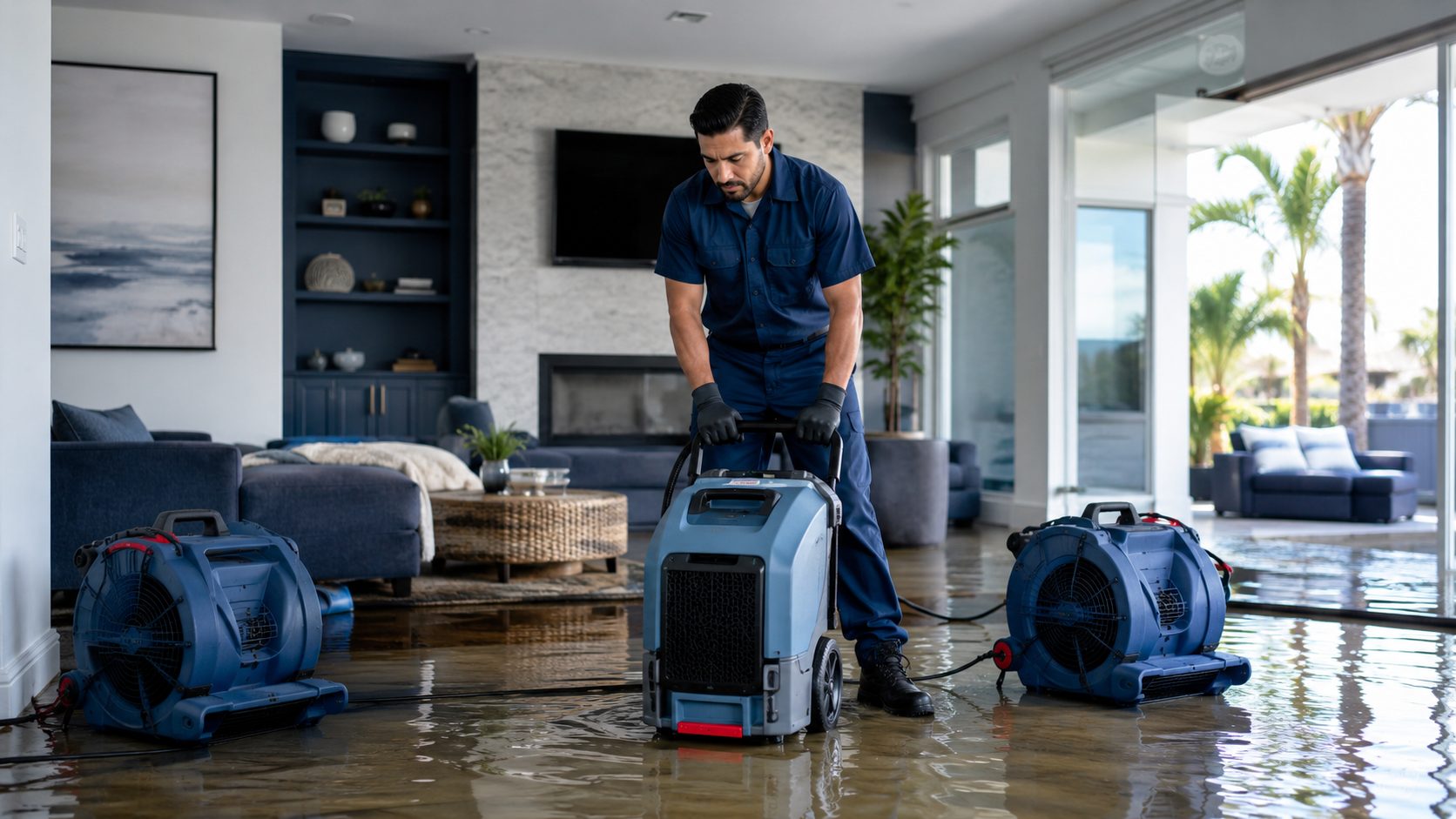
Whether water-damaged carpet can be saved comes down to two questions: what kind of water, and how long has it been wet? Clean water dried within 24–48 hours is often salvageable. Contaminated water, or carpet that has soaked for days, almost always needs to come out. Here's how professionals make that call — and how you can too.
The 48-hour rule
Carpet and especially the pad beneath it act like sponges. Once wet, they hold moisture against the subfloor, and in Orange County's mild climate, mold can begin growing in that trapped moisture within 24–48 hours. After that window, the question shifts from "can we dry it?" to "is it safe to keep?" Speed is everything.
Save or replace: it depends on the water category
| Water type | Example source | Carpet | Pad |
|---|---|---|---|
| Category 1 — clean | Supply line, sink overflow | Usually salvageable if dried fast | Often replaced |
| Category 2 — gray | Washing machine, dishwasher | Sometimes, with cleaning/sanitizing | Replace |
| Category 3 — black | Sewage, toilet backup, flood water | Replace — not salvageable | Replace |
Even with clean water, the pad is usually replaced. It's inexpensive, it holds water longest, and drying it in place rarely justifies the mold risk. The carpet itself can often be lifted, dried, re-stretched, and re-installed over new pad.
What determines whether clean-water carpet survives
- Response time — extraction within hours, not days.
- Carpet construction — synthetic fibers (nylon, polyester) tolerate water far better than natural fibers (wool, jute-backed).
- How thoroughly it's dried — floated and dried with air movers to a documented dry standard, not just surface-dried.
- Whether it was contaminated — any exposure to sewage or standing flood water ends the conversation: it goes.
The hidden risk: the subfloor
Even if the carpet looks fine, water passes through it into the pad and subfloor. Wet subfloor — plywood, OSB, or a concrete slab — must be dried too, or you'll get mold and odor under a "clean" carpet. This is why professionals use moisture meters to check what's underneath, not just the surface. Learn more about how we approach water damage.
Should you dry it yourself?
For a small, clean spill caught immediately, a wet/dry vacuum and fans may be enough. For anything larger — a burst supply line, an overflowing appliance, or water that sat overnight — DIY drying usually leaves moisture in the pad and subfloor that surfaces later as mold and musty odor. Professional extraction pulls far more water than a household vacuum, and structural drying reaches the layers you can't.
Frequently asked questions
How long does it take for wet carpet to mold?
Mold can begin in the carpet, pad, and subfloor within 24–48 hours of getting wet — faster in warm, humid conditions. That window is why fast extraction matters.
Can I just dry the carpet with fans?
Fans help the surface, but they rarely dry the pad and subfloor underneath. Without proper extraction and monitored structural drying, trapped moisture leads to mold and odor even when the carpet feels dry.
Does insurance pay to replace water-damaged carpet?
If the water damage is from a sudden, covered event, replacing unsalvageable carpet and pad is typically part of the claim. Document it before removal and check your coverage.
Not sure if your carpet can be saved? DKI Restotech will inspect it free, check the pad and subfloor, and give you a straight answer. Call (949) 359-4090 — 24/7 across Orange County.
{# Google "Preferred Sources": readers add us as a preferred source so our articles surface more often in their Top Stories / news results. Official embed (button + deeplink fallback): https://developers.google.com/search/docs/appearance/preferred-sources #}Want more of our local restoration guides in your Google results?
Adds DKI Restotech to your preferred sources in Google Search. You can change it anytime.
Related Posts
Atmospheric River Flooding: What to Do in the First 24 Hours
A step-by-step guide to the first 24 hours after atmospheric river flooding, covering safety, insurance documentation, extraction urgency, …
Roof Leaking in Heavy Rain? Emergency Steps for SoCal Homes
A roof leak in heavy rain can hide bigger damage behind the ceiling. Here's how LA and OC …
Burst Pipe? What to Do in the First Hour (LA & OC Emergency Guide)
A burst pipe can release hundreds of gallons an hour. Here's exactly what to do in the first …