
Atmospheric River Flooding: What to Do in the First 24 Hours
By DKI Restotech Team · Oct 8, 2026 · 5 min read
When an atmospheric river floods your home, shut off electricity to affected areas immediately, identify the water's contamination category, document everything with photos before cleanup begins, and start extraction within hours, not days. Mold can start growing on wet materials in as little as 24 to 48 hours, so acting fast and in the right order determines the outcome.
What should you do in the first hour after flooding?
Cut power to any circuit touching standing water at the main panel, not at the outlet, and call an electrician or your utility if the panel itself sits in water. Never wade into a flooded room if you smell gas, hear buzzing, or see submerged outlets.
- Shut off electricity to affected circuits, or the whole panel if water reached it
- Turn off the main water supply if flooding stems from a burst pipe or backup, not just rain intrusion
- Check for structural hazards: sagging ceilings, buckling floors, or foundation seepage
- Keep children and pets out of affected rooms until the water is identified or extracted
What is a contamination category, and why does it matter?
IICRC standards classify flood water into three categories, and atmospheric river flooding can fall into any of them depending on what the water picked up before reaching your home. Treating a contaminated room like a clean one is one of the most common, and costly, mistakes homeowners make.
- Category 1 (clean): roof leaks, window intrusion, rainwater that never touched the ground
- Category 2 (gray): water that crossed yards, gutters, or pooled on pavement before entering
- Category 3 (black): sewage backup, groundwater intrusion, or storm-drain and creek overflow
Never assume rainwater is automatically safe to clean up yourself. If it traveled across a parking lot, alley, or hillside before reaching your home, treat it as contaminated.
How should you document the damage before cleanup starts?
Insurance adjusters weigh documentation heavily, so photograph and video every affected room, wall, and item before you move or discard anything. Walk through with a flashlight, capture water lines on walls, and keep damaged items, even ruined ones, until your adjuster says otherwise.
- Photograph and video all rooms, water lines, and damaged belongings from multiple angles
- Note when flooding started and how water entered, if known
- Keep receipts for any emergency mitigation, such as tarps, pumps, or temporary lodging
- Contact your insurer promptly, our insurance claims guidance walks through what adjusters look for
Why does water extraction have to happen within hours, not days?
Standing water and saturated drywall, carpet, and padding create ideal mold conditions almost immediately, and visible colonization can begin within 24 to 48 hours in Southern California's mild, humid post-storm air. Every hour water sits is an hour more moisture wicks into framing, baseboards, and subflooring you can't see.
That's why professional water extraction focuses on pulling bulk water out fast, then switching to structural drying before materials have time to swell, delaminate, or host mold growth.
What can you safely do yourself, and what should you leave to professionals?
Some first-response steps are safe and even helpful before crews arrive; others risk your safety, void insurance coverage, or spread contamination further into the home.
| Safe for homeowners | Leave to professionals |
|---|---|
| Shutting off power or water, moving valuables to dry areas | Entering Category 2 or 3 water without PPE |
| Photographing damage for insurance | Extracting standing water from carpet, pad, or subfloor |
| Opening windows or doors for airflow, weather permitting | Running dehumidifiers and air movers without moisture mapping |
| Removing small, unsalvageable items like cardboard or paper | Cutting drywall, pulling baseboards, or assessing hidden mold |
How does professional structural drying actually work?
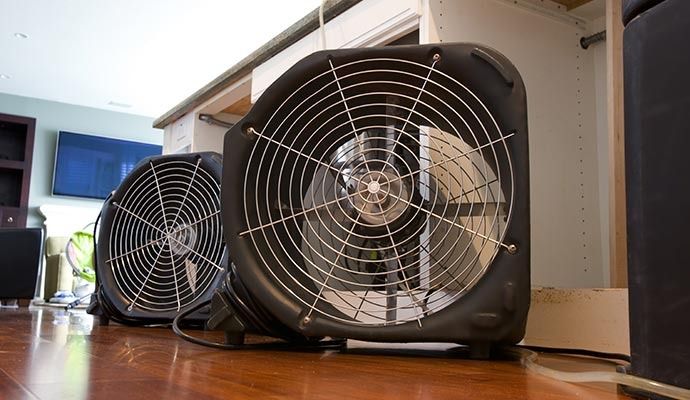
DKI Restotech crews start with moisture mapping, using meters and thermal imaging to find water hidden inside walls, under flooring, and behind cabinetry that isn't visible to the eye. We follow IICRC S500 standards, extracting bulk water first, then positioning air movers and dehumidifiers to dry structural materials in place whenever possible.
We re-check moisture levels daily and don't call a space dry until readings confirm it, not just until it looks dry. For more on how we scope and begin that process, see our water damage restoration overview.
Why could this winter bring more atmospheric river flooding than usual?
NOAA forecasters have put the probability of a very strong El Nino for winter 2026-27 at greater than 90%, with some outlooks suggesting it could rank among the strongest on record. Strong El Nino winters have historically brought well-above-normal rainfall to Southern California, and forecasters are watching for roughly four to seven significant atmospheric river storms between November and March.
Those are forecasts, not guarantees, and any individual storm's track and intensity are impossible to pin down months out. Still, homeowners in flood-prone or hillside areas of LA, Orange County, and Riverside should treat this as a season to have a response plan ready, not a season to improvise.
What should you do if your home floods?
Since 1980, DKI Restotech has been a family-owned, IICRC-certified restoration contractor, and we run 24/7 emergency response crews across Los Angeles, Orange County, and Riverside specifically for storm season. The first 24 hours set the trajectory for your entire recovery, so don't wait to see if the water dries on its own.
Frequently asked questions
How long does it take for mold to grow after flooding?
Mold can begin colonizing damp drywall, carpet, and wood within 24 to 48 hours under typical Southern California indoor conditions, especially when humidity stays elevated after a storm. That's why fast extraction and structural drying, not just mopping up visible water, are essential within the first day.
Will my homeowners insurance cover atmospheric river flood damage?
Coverage depends on the cause: wind-driven rain intrusion through a roof or window is often covered under standard policies, while rising floodwater typically requires separate flood insurance. Document everything before cleanup and call your adjuster early so you understand what your specific policy addresses.
Can I just run fans and a dehumidifier myself instead of calling a restoration company?
For a small, clean-water spill, basic fans may help, but true structural drying requires moisture mapping to find water trapped in walls, subfloor, and insulation that fans alone won't reach. Without verifying hidden moisture, you risk hidden mold growth behind drywall weeks after the surface looks dry.
If an atmospheric river has flooded your home, don't wait to see how bad it gets. DKI Restotech's IICRC-certified crews respond 24/7 across Los Angeles, Orange County, and Riverside, call (949) 359-4090 now for emergency water extraction and drying.
{# Google "Preferred Sources": readers add us as a preferred source so our articles surface more often in their Top Stories / news results. Official embed (button + deeplink fallback): https://developers.google.com/search/docs/appearance/preferred-sources #}Want more of our local restoration guides in your Google results?
Adds DKI Restotech to your preferred sources in Google Search. You can change it anytime.
Related Posts
Roof Leaking in Heavy Rain? Emergency Steps for SoCal Homes
A roof leak in heavy rain can hide bigger damage behind the ceiling. Here's how LA and OC …
Burst Pipe? What to Do in the First Hour (LA & OC Emergency Guide)
A burst pipe can release hundreds of gallons an hour. Here's exactly what to do in the first …
Can Water-Damaged Carpet Be Saved? An OC Homeowner's Guide
Clean water caught within 48 hours? Your carpet can often be saved. Sewage or days of soaking? It …