
Balboa Peninsula Flooding: Saltwater Cleanup Guide for Newport Beach Homeowners
By DKI Restotech Team · Oct 16, 2026 · Updated Oct 15, 2026 · 4 min read
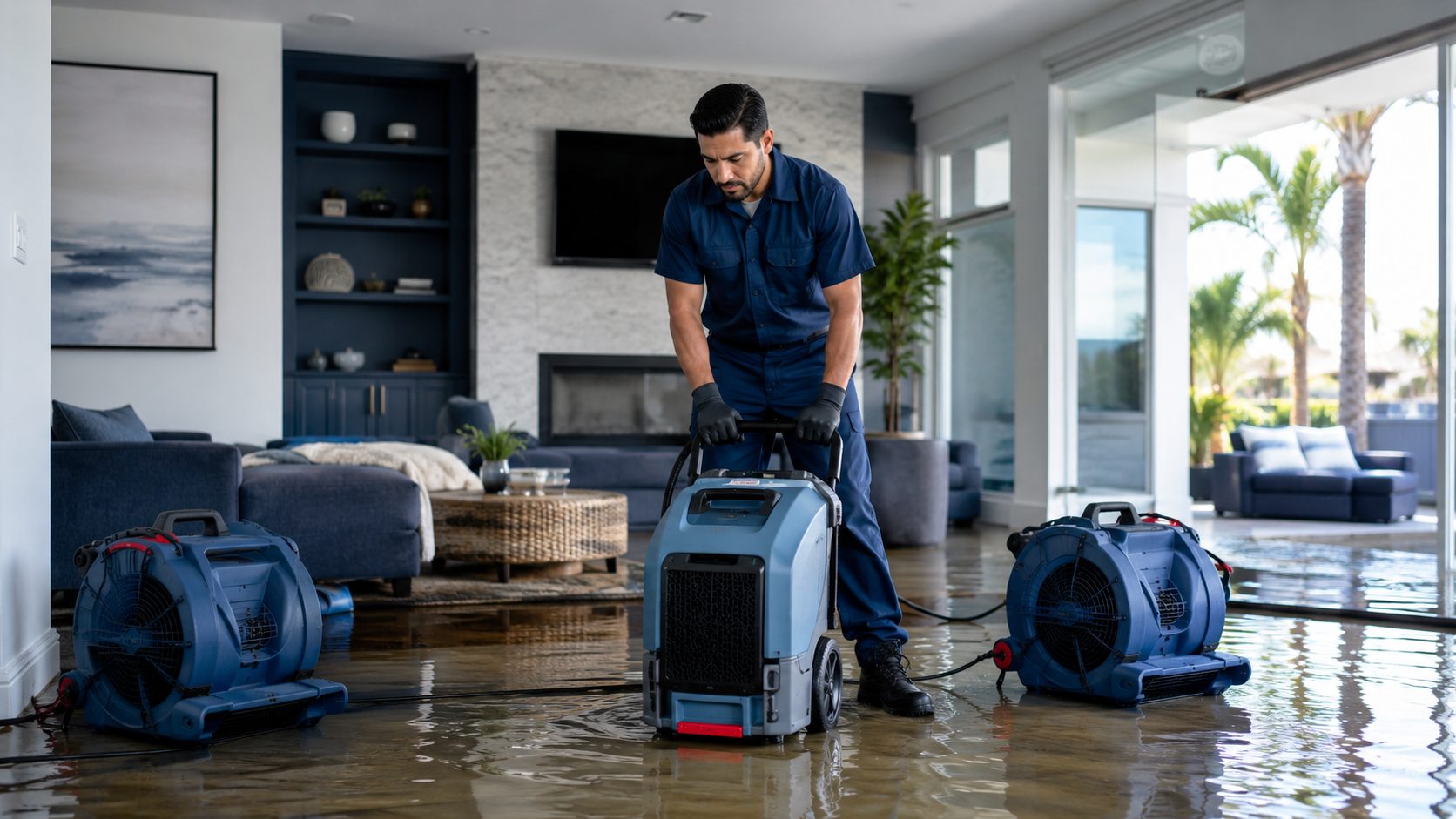
If seawater from the October 2026 Balboa Peninsula flooding reached your home, treat it as contaminated water: shut off power to wet areas, photograph everything before you move it, and get standing water out and materials drying within 24 to 48 hours. Saltwater keeps damaging wiring, metal and drywall after the water recedes, so speed matters.
What happened on the Balboa Peninsula?
On Friday, October 9, 2026, high surf and elevated tides driven by the remnants of Tropical Storm Rachel pushed ocean water over the sand berms and into streets on the Balboa Peninsula. The City of Newport Beach declared a local emergency that day to secure additional resources.
The water receded within hours, but many homes and garages took in seawater mixed with street runoff and sand. That mix is what makes cleanup different from an ordinary leak.
Why is saltwater flooding worse than a pipe leak?
Clean water from a burst supply line is the least hazardous kind. Floodwater that has run across streets and sand picks up fuel residue, debris and bacteria, which the IICRC S500 water damage standard classifies as Category 3, or grossly contaminated, water.
Seawater adds a second problem: salt. Chloride residue stays in drywall, insulation, wood framing and concrete after everything looks dry. It keeps drawing moisture back in and corrodes electrical connections, fasteners, appliance components and HVAC parts for weeks afterward.
- Drywall and insulation that soaked up floodwater usually has to be cut out and replaced, not just dried.
- Electrical outlets, panels and wiring that were submerged should be inspected by a licensed electrician before you use them.
- Appliances and HVAC equipment exposed to seawater can fail later, even if they seem to work at first.
- Hard flooring and slab foundations can trap moisture and salt beneath the surface.
What should you do first?
- Stay safe. Keep power off in any area where water touched outlets or the panel, and avoid wading through standing water.
- Document before cleaning. Photograph and video every room, the waterline on walls, and damaged belongings. Your insurer will ask for this.
- Do not run the HVAC system if ducts or the air handler took on water. It can spread contamination through the house.
- Remove standing water quickly. Mold can begin growing within 24 to 48 hours in wet, warm materials.
- Wear protection. Use gloves, boots and an N95 mask when handling flood-soaked items, and wash hands after contact.
- Keep damaged items until your adjuster has seen them, or photograph them clearly before disposal.
Does homeowners insurance cover this flooding?
Usually not. Standard homeowners policies exclude flood damage, and water pushed inland by ocean surge counts as flood. That damage is covered by a separate flood policy, either through the National Flood Insurance Program (NFIP) or a private flood insurer.
If you have flood coverage, file your claim promptly and keep receipts for any emergency cleanup. New NFIP policies generally carry a 30-day waiting period, so a policy bought now will not cover this event. Some related damage, such as a pipe that burst separately, may still fall under your homeowners policy, so review both with your agent.
How does professional saltwater flood cleanup work?
A certified restoration crew follows the IICRC S500 process for Category 3 water. That means extracting standing water, removing contaminated porous materials such as wet drywall and insulation, then cleaning and treating the remaining structure.
Drying comes next, using commercial air movers and dehumidifiers with moisture readings taken daily until materials reach normal levels. Thorough drying and documentation also give you the strongest record for your insurance claim and help prevent mold from following the flood.
Where can Newport Beach residents get help?
- Sandbags: the City offered free prefilled sandbags at the City Corporation Yard, 592 Superior Ave., and at Marina Park. Empty bags were available at Newport Beach fire stations while supplies lasted.
- Emergency alerts: sign up for Newport Notified through the Newport Beach Police Department at NBPD.org.
- Life-threatening emergencies: call 911.
California's price-gouging law (Penal Code section 396) limits price increases on repair and cleanup services after a declared emergency. DKI Restotech charges our standard rates during local emergencies and bills insurance directly.
Frequently asked questions
Can I clean up saltwater flooding myself?
You can safely document damage, remove belongings and clear standing water once power is off. Floodwater from streets and the ocean is Category 3 contaminated water, so removing soaked drywall, drying the structure and confirming salt and moisture are gone is best handled by IICRC-certified technicians.
How long does flood drying take?
Most homes need three to five days of professional drying after contaminated materials are removed. Larger losses, slab foundations or saturated framing can take longer, and moisture should be measured daily until readings return to normal.
Will mold grow after the flooding?
It can. Mold may start within 24 to 48 hours on wet drywall, carpet and wood. Removing soaked materials quickly and drying the structure completely are the most effective ways to prevent it.
DKI Restotech is a family-owned, IICRC-certified restoration company that has served Orange County since 1980. Our crews are available 24/7 for water damage restoration and water extraction across Newport Beach, and we can help you prevent mold after the water is gone. Call (949) 359-4090 for an inspection.
Want more of our local restoration guides in your Google results?
Adds DKI Restotech to your preferred sources in Google Search. You can change it anytime.
Related Posts
Atmospheric River Flooding: What to Do in the First 24 Hours
A step-by-step guide to the first 24 hours after atmospheric river flooding, covering safety, insurance documentation, extraction urgency, …
Roof Leaking in Heavy Rain? Emergency Steps for SoCal Homes
A roof leak in heavy rain can hide bigger damage behind the ceiling. Here's how LA and OC …
Burst Pipe? What to Do in the First Hour (LA & OC Emergency Guide)
A burst pipe can release hundreds of gallons an hour. Here's exactly what to do in the first …