
Burst Pipe? What to Do in the First Hour (LA & OC Emergency Guide)
By DKI Restotech Team · Jul 27, 2026 · Updated Aug 11, 2026 · 6 min read
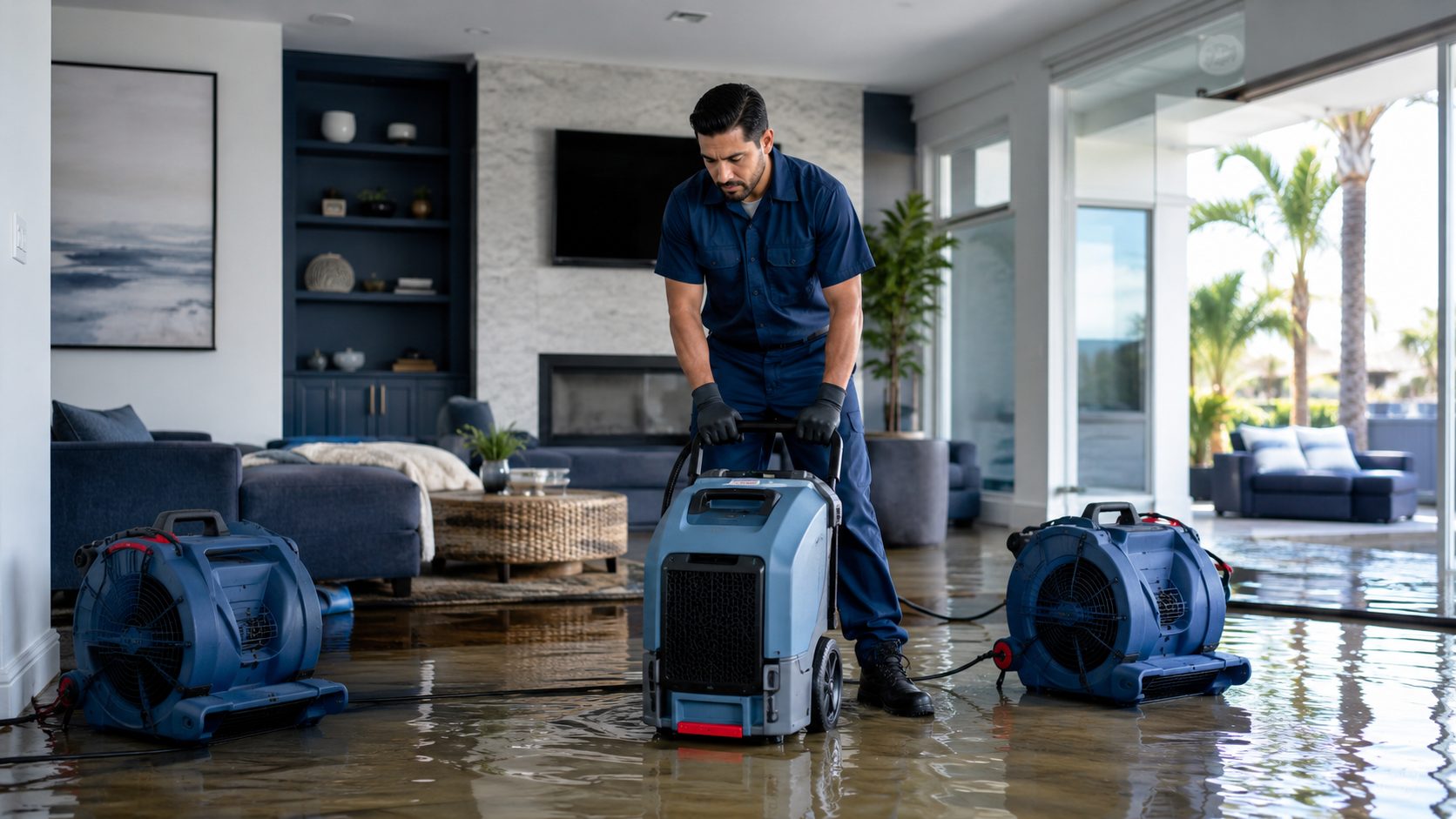
A burst pipe can release 4–8 gallons of water per minute — enough to flood a room before you've found a mop. The single most important thing you can do is shut off the water within the first few minutes, then kill power to the affected area and start documenting. What you do in the first hour largely decides whether this becomes a two-day dry-out or a two-month reconstruction.
At DKI Restotech we've responded to burst pipes across Los Angeles and Orange County for over 40 years — from frozen hose bibs in a January cold snap to failed copper in a 1970s Anaheim tract home. This is the exact sequence we tell homeowners to follow while our crew is en route.
Step 1: Shut off the water (first 2 minutes)
Stop the source before anything else. You have two options, in order of preference:
- Local shut-off valve — under the sink, behind the toilet, or on the supply line to the appliance. Turn clockwise (righty-tighty) until it stops.
- Main water shut-off — if the leak is inside a wall, from a slab leak, or you can't find a local valve, shut off the whole house. The main is usually where the water line enters the home: in a garage, a basement, an exterior wall, or at the street-side meter box (you may need a meter key).
Locate your main shut-off now, before an emergency — most homeowners have never touched it. In many Southern California homes on slab foundations, the main is at the front of the house near the hose bib or in a ground-level meter box near the sidewalk.
Step 2: Cut the power (first 5 minutes)
Water and electricity are a lethal combination. If water is near outlets, light fixtures, or your electrical panel, switch off power to the affected area at the breaker — but only if you can reach the panel without standing in water. If the panel itself is wet or you'd have to wade to it, stay out and call an electrician or the fire department. Never enter a flooded room with live power.
Step 3: Document everything (first 15 minutes)
Before you move or clean anything, photograph and video the damage from every angle — standing water, the source, soaked drywall, wet flooring, and any damaged belongings. This documentation is the backbone of your insurance claim, and adjusters expect it. Capture close-ups of the failed pipe or fitting if you can see it.
Here's what to record for your claim:
| Document | Why it matters |
|---|---|
| Wide + close-up photos/video of all damage | Proves the extent and the source |
| Time and date the pipe burst | Establishes a "sudden and accidental" event (usually covered) |
| Photos of damaged belongings + rough values | Supports contents (personal property) claim |
| Receipts for anything you buy (fans, tarps) | Emergency mitigation costs are typically reimbursable |
Step 4: Start limiting the damage (first 30 minutes)
Your homeowners policy actually requires you to take reasonable steps to prevent further damage. Do what's safe:
- Move furniture, rugs, electronics, and valuables out of the water.
- Lift wet upholstery off the floor and slip foil or wood blocks under furniture legs to stop staining.
- Mop or towel up standing water and, if it's safe, open windows and run fans to start air movement.
- Do not use a household vacuum to remove water, and don't put drywall or flooring in the trash yet — the adjuster may need to see it.
What NOT to do
- Don't wait to "see if it dries." Mold can begin within 24–48 hours, and water wicks into subfloors, insulation, and wall cavities you can't see.
- Don't assume surface-dry means dry. Drywall and framing can hold moisture for weeks behind a dry-looking surface.
- Don't run a burst-pipe cleanup as a DIY project if the water is more than a small, clean spill — trapped moisture is the number-one cause of "we thought it was fine" mold calls.
Step 5: Call a professional water damage crew
Fans and towels handle the water you can see. A professional restoration team handles the water you can't. Using moisture meters and thermal imaging, an IICRC-certified crew finds hidden moisture, extracts water, and sets commercial air movers and dehumidifiers to dry the structure to a documented target — typically over 3–5 days — so mold never gets a foothold.
Speed matters most. Emergency response within the first few hours can be the difference between drying your existing materials and tearing them out. If you're dealing with a burst or broken pipe, or a suspected slab or plumbing leak, DKI Restotech is available 24/7 across Los Angeles, Orange County, and Riverside.
How professional burst-pipe restoration works
Once the source is stopped, a proper restoration follows the IICRC S500 standard for water damage:
- Inspection & moisture mapping — locate every wet material, including inside walls and under flooring.
- Water extraction — truck-mounted or portable extractors remove standing and absorbed water.
- Structural drying — air movers and dehumidifiers dry materials to a documented dry standard, monitored daily.
- Cleaning & sanitizing — antimicrobial treatment where needed.
- Restoration & repairs — replacing drywall, flooring, and finishes to pre-loss condition.
How to prevent the next burst pipe
- Insulate exposed pipes in attics, garages, and exterior walls before winter cold snaps.
- Replace aging galvanized or polybutylene supply lines and old braided washing-machine hoses.
- Know your water pressure — over 80 psi stresses fittings; add a pressure regulator if needed.
- Install an automatic water shut-off or leak sensors near water heaters, washers, and under sinks.
Frequently asked questions
Does homeowners insurance cover a burst pipe?
In most California policies, water damage from a sudden and accidental burst pipe is covered, while damage from long-term, unaddressed leaks or lack of maintenance is often excluded. Document the event immediately and report it promptly. See our insurance claims help for details.
How much water damage can a burst pipe cause?
A lot, fast — a common half-inch supply line can release hundreds of gallons per hour. Even a slow pinhole leak inside a wall can saturate framing and feed mold for weeks before you notice a stain.
How long does it take to dry out after a burst pipe?
Most residential water losses dry in 3–5 days with professional equipment, though the timeline depends on how much water, which materials got wet, and how quickly extraction started.
Burst pipe right now? Shut off the water, then call DKI Restotech at (949) 359-4090 — we respond 24/7 across LA and Orange County. Or request a free inspection.
{# Google "Preferred Sources": readers add us as a preferred source so our articles surface more often in their Top Stories / news results. Official embed (button + deeplink fallback): https://developers.google.com/search/docs/appearance/preferred-sources #}Want more of our local restoration guides in your Google results?
Adds DKI Restotech to your preferred sources in Google Search. You can change it anytime.
Related Posts
Atmospheric River Flooding: What to Do in the First 24 Hours
A step-by-step guide to the first 24 hours after atmospheric river flooding, covering safety, insurance documentation, extraction urgency, …
Roof Leaking in Heavy Rain? Emergency Steps for SoCal Homes
A roof leak in heavy rain can hide bigger damage behind the ceiling. Here's how LA and OC …
Can Water-Damaged Carpet Be Saved? An OC Homeowner's Guide
Clean water caught within 48 hours? Your carpet can often be saved. Sewage or days of soaking? It …