
Biohazard Cleanup: When to Call a Pro and Why DIY Is Dangerous
By DKI Restotech Team · Jul 27, 2026 · Updated Aug 11, 2026 · 2 min read
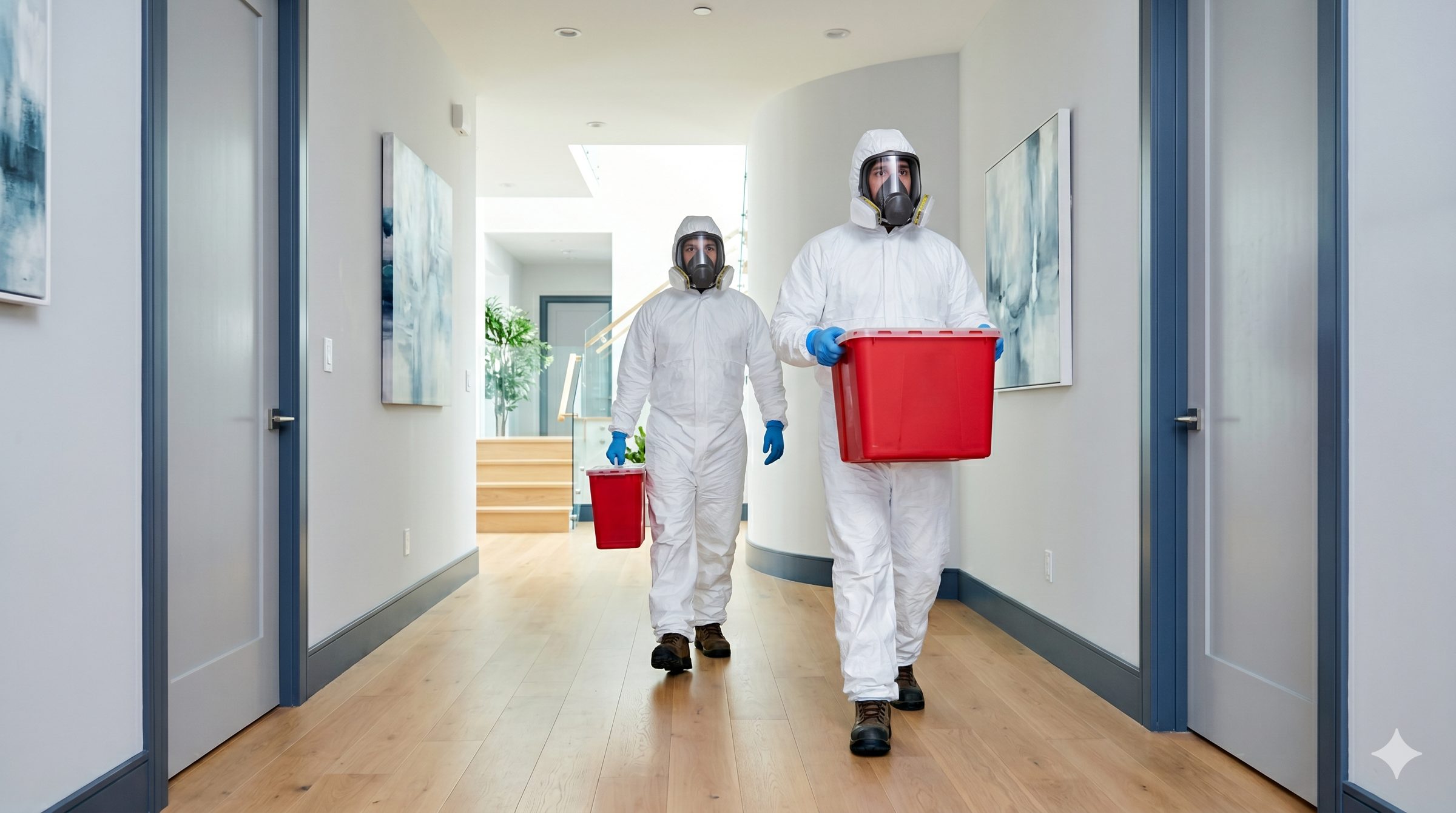
Biohazard cleanup covers any situation involving blood, bodily fluids, sewage, or other potentially infectious material — and it's one of the few restoration jobs you should never attempt yourself. The risks are real: bloodborne pathogens, chemical exposure, and regulated waste that can't legally go in your household trash. Professionals handle it safely, thoroughly, and with discretion.
What situations require professional biohazard cleanup?
| Situation | Why it's a biohazard |
|---|---|
| Unattended death / decomposition | Bodily fluids, pathogens, odor, and structural contamination |
| Trauma or crime scene | Blood and other potentially infectious material (OPIM) |
| Sewage backup | Category 3 "black water" with bacteria, viruses, and parasites |
| Hoarding / severe neglect | Biological waste, mold, pests, and unsafe conditions |
| Infectious disease contamination | Pathogen transmission risk requiring disinfection |
| Chemical or drug residue | Toxic residues requiring specialized handling |
Why DIY biohazard cleanup is dangerous
- Infection risk — blood and bodily fluids can carry hepatitis B and C, HIV, and other pathogens that survive on surfaces. Cleanup requires proper personal protective equipment and training.
- Hidden contamination — fluids seep into flooring, subfloor, and wall cavities; surface cleaning leaves contamination (and odor) behind.
- Regulated waste — biohazardous materials must be contained, transported, and disposed of according to strict regulations, not thrown in the trash.
- Wrong products — ordinary cleaners don't reliably kill bloodborne pathogens; hospital-grade disinfectants and correct dwell times are required.
How professional biohazard remediation works
Certified crews follow OSHA's Bloodborne Pathogens Standard (29 CFR 1910.1030) and established remediation practices:
- Assessment and containment of the affected area.
- Removal of contaminated materials that can't be disinfected (porous flooring, drywall).
- Cleaning and disinfection with hospital-grade products and proper contact times.
- Odor removal and deodorization at the source.
- Regulated-waste disposal and documentation.
- Verification that the area is safe to reoccupy.
Handled with discretion and compassion
Many biohazard calls follow a traumatic event. Professional teams arrive in unmarked vehicles where needed, work discreetly, and treat families with compassion — so you can focus on what matters while the scene is restored safely. See our biohazard cleanup services.
Frequently asked questions
Is biohazard or trauma cleanup covered by insurance?
Often, yes. Many homeowners policies cover biohazard and trauma scene cleanup, and in California, victim-compensation programs may help with crime-scene cleanup costs. We work directly with insurers and can help you navigate coverage.
Do you handle sewage backup cleanup?
Yes. Sewage is Category 3 contaminated water and is treated as a biohazard — extraction, removal of affected porous materials, disinfection, and drying. See our sewage cleanup service.
How quickly can you respond to a biohazard situation?
We offer 24/7 emergency response across LA and Orange County, because biohazard situations are time-sensitive for both safety and property.
Facing a biohazard situation? DKI Restotech responds 24/7 with discretion and care. Call (949) 359-4090.
{# Google "Preferred Sources": readers add us as a preferred source so our articles surface more often in their Top Stories / news results. Official embed (button + deeplink fallback): https://developers.google.com/search/docs/appearance/preferred-sources #}Want more of our local restoration guides in your Google results?
Adds DKI Restotech to your preferred sources in Google Search. You can change it anytime.
Related Posts
Sewage Backup Cleanup: Health Risks and the Right Way to Handle It
A sewage backup isn't just dirty water — it's a biohazard full of bacteria, viruses, and parasites. Here's …